


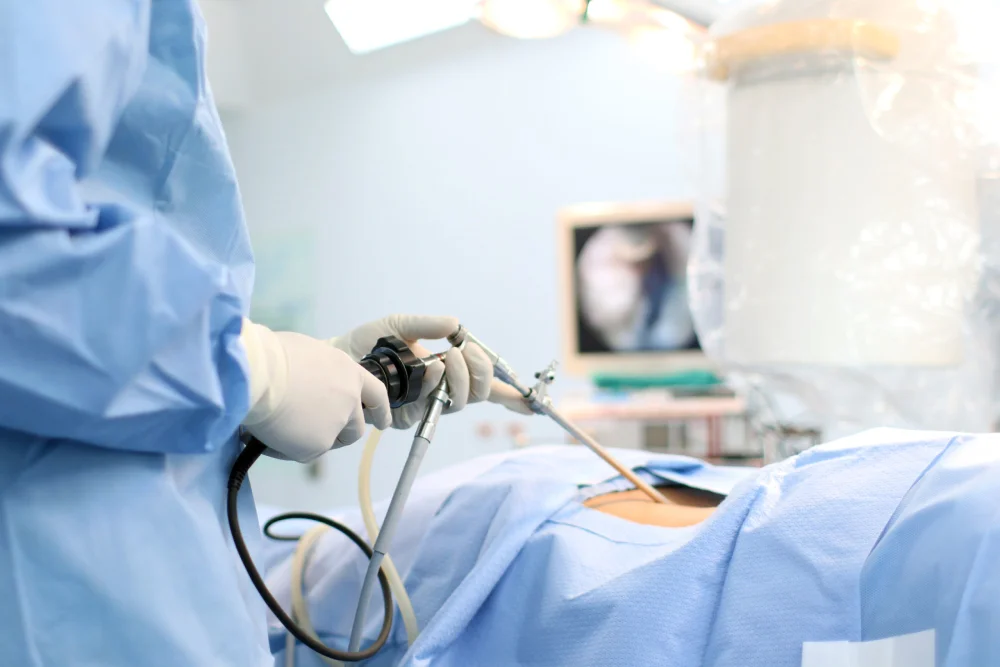
Laparoscopy
Laparoscopy is a minimally invasive surgical procedure used to examine a woman’s pelvic organs. It involves inserting a thin and lighted tube with a video camera, called a laparoscope, which is inserted through a small incision in your abdomen. Through this, a surgeon can view the internal organs on a monitor and perform necessary procedures with minimal scarring and faster recovery.
Area of Expertise:
Dr. Vandana Mittal Singla, a Laparoscopic Surgeon, is stepped into this journey with a mission of diagnosing internal conditions, such as endometriosis, ovarian cysts, or abdominal tumours, and ensuring patient safety through careful surgical planning and precision.
Cyst- Offering a safe minimally invasive way to remove the cyst while preserving the ovary whenever possible. Common reasons include:
- Severe or ongoing pain caused by the cyst.
- Risk of rupture leading to internal bleeding or infection.
- Suspicious appearance suggesting possible malignancy.
- Large or growing cysts that are unlikely to go away on their own.
- Ovarian torsion (twisting of the ovary), which can cut off blood supply.
Uterus- When a woman faces certain uterine conditions, Dr. Mittal Singla recommends a laparoscopic surgery and manages these conditions. Because:
- Uterine prolapse or structural problems.
- Endometriosis affecting the uterus or surrounding tissues.
- Abnormal uterine bleeding not responding to medical treatment.
- Uterine fibroids causing heavy bleeding, pain, or fertility problems.
- Removal of the uterus (laparoscopic hysterectomy) due to cancer, large fibroids, or other serious conditions.
Fibroids- When fibroids cause significant symptoms or complications and cannot be managed effectively with medication alone, the expert recommends laparoscopic surgery. Fibroids may cause:
- Severe pelvic pain or pressure.
- Infertility or recurrent miscarriages.
- Rapid growth or large size of fibroids.
- Heavy or prolonged menstrual bleeding leading to anaemia.
- Pressure symptoms, such as frequent urination or constipation.
Treatments
Contact Info
- H. No. 303, Advocate Enclave, Sec-49A, Near BSNL Exc, Chandigarh - 160047
- vandanamittal1271@gmail.com
- +91 9056017673